SE-BXR / SE-TXR Restraint Sensors
Biaxial & Triaxial Vehicle Restraint Sensors for Single-Belt Rolling Roads
Direct-fit multi-axis load cells for MTS single-belt systems. Designed to measure Fx and Fy restraint loads while isolating parasitic Fz transfer and drastically reducing vehicle setup times.
The Restraint Interference Problem
Vehicle restraint systems in automotive wind tunnels frequently introduce structural and aerodynamic interference. Standard restraint struts can trip the boundary layer, altering underbody flow. Furthermore, kinematic binding in rigid restraint struts creates a parallel load path for vertical chassis forces. This artificially reduces the true downforce data measured by the primary under-belt aerodynamic balances.
Compounding this is the operational inefficiency of legacy MTS systems, which require technicians to physically swap out rigid shim plates to accommodate varying chassis heights—a tedious process that burns through expensive tunnel time.
SE-BXR / SE-TXR Architecture
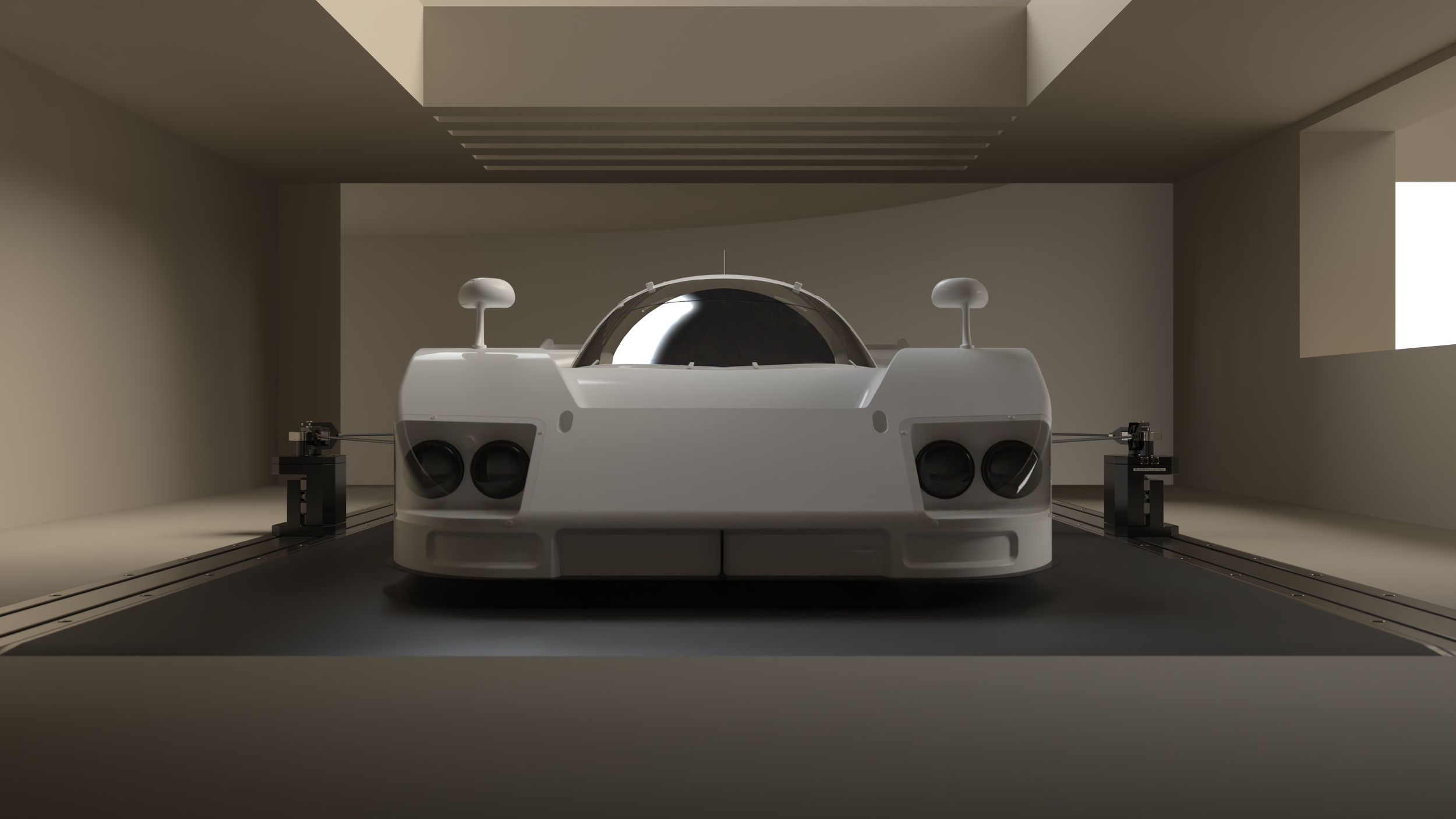
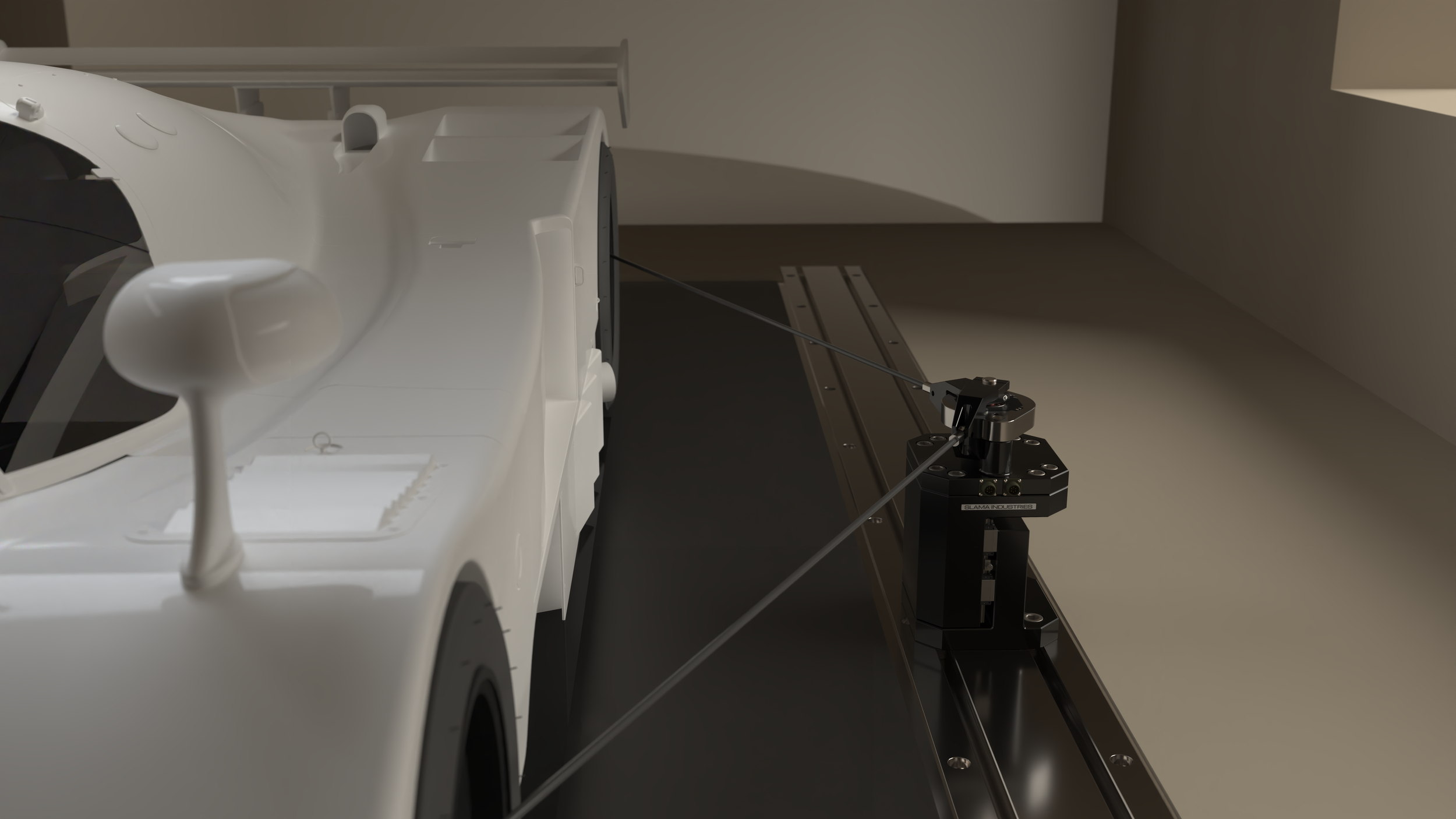
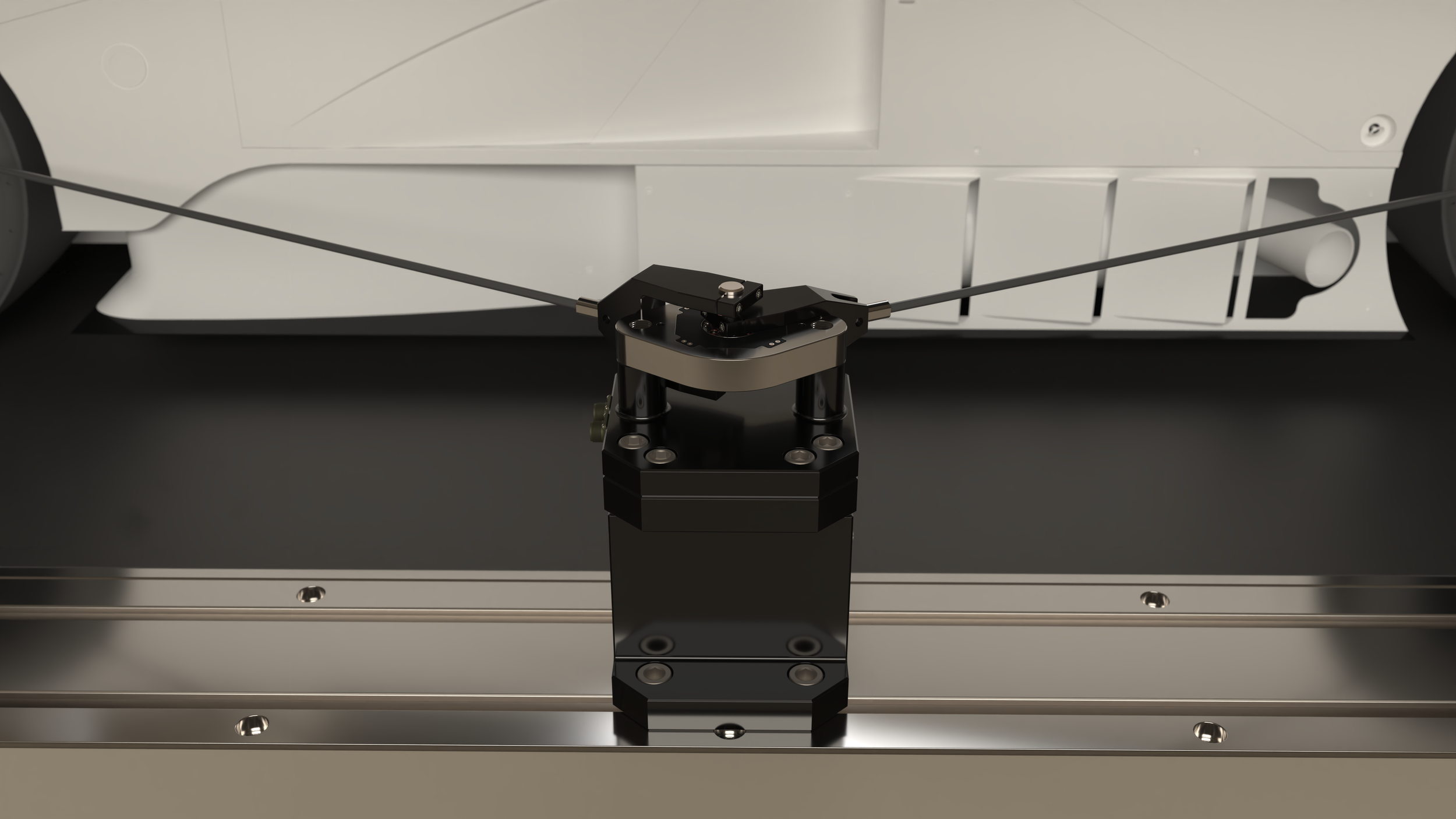
The SE-BXR (Biaxial) and SE-TXR (Triaxial) sensors mount directly to the lateral T-slots of MTS single-belt rolling road systems to secure the test article, completely reimagining both aerodynamic profile and operational efficiency.
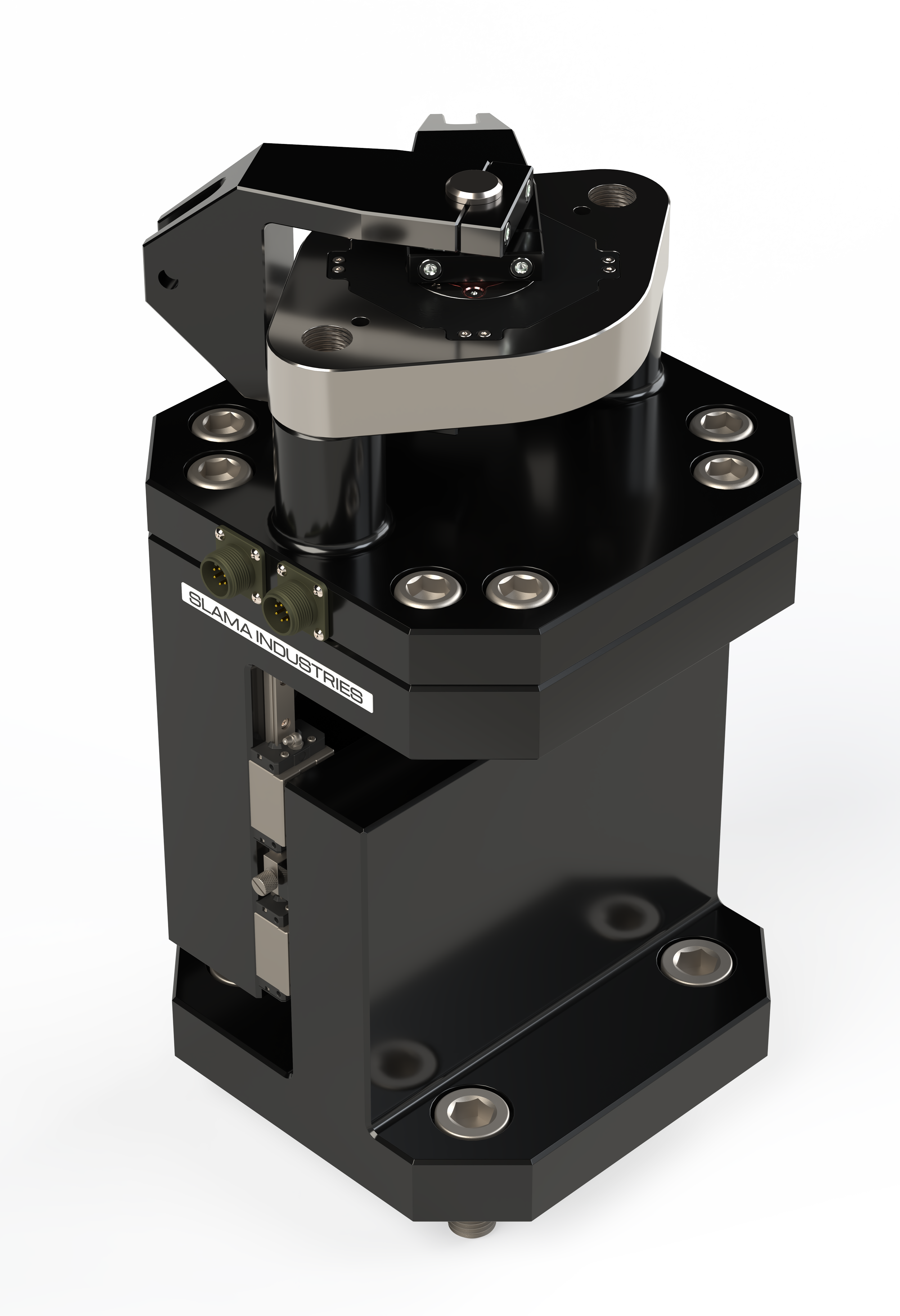
Rapid Height-Adjustment Slide: We have engineered a precision linear slide directly into the sensor assembly. This allows facility engineers to dial in the exact restraint height in seconds, entirely eliminating the need for cumbersome plate-swapping during vehicle changeovers or aggressive pitch/heave adjustments.
Aerodynamic Profile: The sensor housing is geometrically constrained to minimize frontal area, drastically reducing underbody wake disturbances and boundary layer tripping.
Direct T-Slot Integration: Precision-machined interface plates mate directly to the existing MTS T-slot geometry, eliminating the need for intermediate, compliant mounting brackets.
Z-Axis Isolation (Triaxial Configuration)
To maintain aerodynamic data integrity, the vehicle restraint vector must remain strictly planar. The SE-TXR series integrates a third measurement bridge (Fz). This allows facility engineers to continuously monitor vertical restraint loads during dynamic ride-height changes and active testing, verifying in real-time that no parasitic vertical load is bypassing the primary tunnel balances.
| Specification | 2 kN Limit | 5.5 kN Limit | 10 kN Limit |
|---|---|---|---|
| Biaxial Model (Fx, Fy) | SE-BXR-2K | SE-BXR-5K5 | SE-BXR-10K |
| Triaxial Model (Fx, Fy, Fz) | SE-TXR-2K | SE-TXR-5K5 | SE-TXR-10K |
| Rated Capacity (Per Axis) | 2.0 kN | 5.5 kN | 10.0 kN |
| Nominal Output | 2.0 mV/V | 2.0 mV/V | 2.0 mV/V |
| Bridge Resistance | 350 Ω | 350 Ω | 350 Ω |
| Mounting Interface | MTS T-Slot | MTS T-Slot | MTS T-Slot |
| Connector Type | PT02E-12-10P | PT02E-12-10P | PT02E-12-10P |
Note: Dynamic continuous-yaw configurations and alternate wind-tunnel interface plates are available upon request.